Most parents trust that when their child goes to school every day, participates in class, submits homework, and takes tests, they are learning what they should. Yet across the United States, countless students advance from one grade to the next while carrying silent learning gaps that widen year after year. These gaps often stay hidden until they suddenly surface as falling grades, frustration, or loss of confidence.
Taking effective notes is not just about jotting down what the teacher says. It’s about actively engaging with the material, understanding it, and creating personalized study resources for future use. When done right, note-taking improves focus, comprehension, and memory retention.
This doesn’t mean schools are failing. It means that learning is deeply personal. Children grasp concepts in different ways and at different paces. Understanding how to identify learning gaps early can make a significant difference in your child’s academic journey.
In this guide, we will explore what learning gaps are, how they form, and the early warning signs parents often overlook. And most importantly, we will talk about what you can do to close these gaps quickly so that your child feels confident, motivated, and successful.
2. What Are Learning Gaps and Why Do They Happen
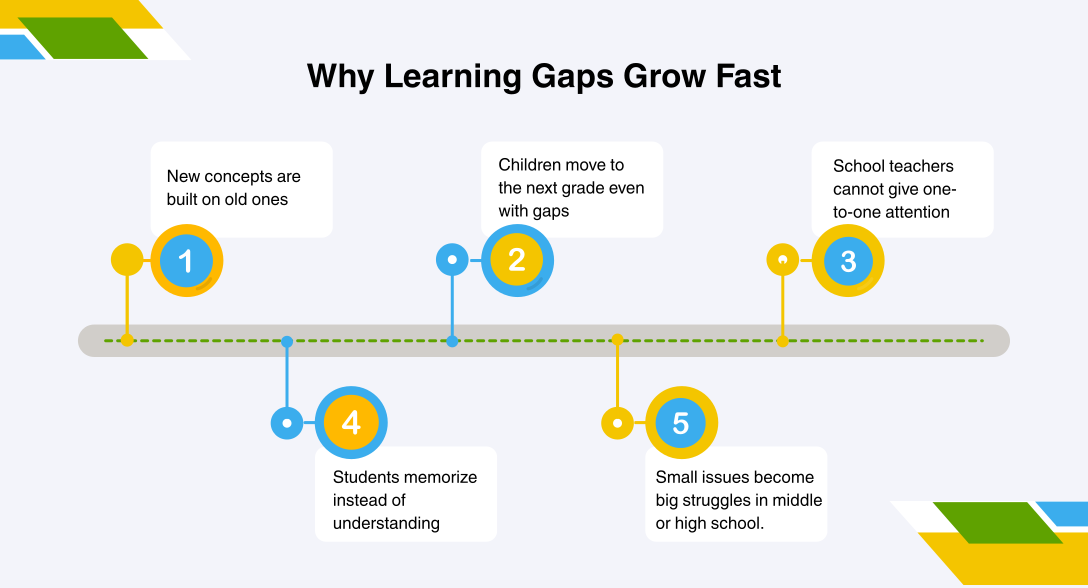
A learning gap is the difference between what your child is expected to know at their grade level and what they actually understand. A child may look fine on the surface but may lack mastery of the foundational skills required for the next grade.
Here is how learning gaps typically form:
Moving to the next topic before mastering the current one
Classrooms often follow a strict pace. If a child does not fully understand fractions, decimals, or grammar basics, the curriculum still moves forward.
Distractions and overload
Many students juggle extracurriculars, screen time, and social activities. As a result, they may not devote the time needed to strengthen weak areas.
One learning style vs one teaching style
Some children learn visually. Others need practice or repetition. If the classroom teaching style does not match the student’s learning style, they may fall behind without anyone realizing it.
Post-pandemic learning loss
Studies in the United States show significant declines in math and reading performance after extended remote learning. Many children still carry those gaps even today.
Shyness or fear of asking questions
Some children avoid raising their hands even when they are confused. They stay silent, and the confusion grows.
Understanding these causes helps parents recognize hidden problems before they become major academic struggles.
Fill the Learning Gaps in your child's educational journey
3. Early Warning Signs That Your Child Has Learning Gaps
Learning gaps rarely appear suddenly. They begin slowly and subtly. Parents often attribute them to laziness or mood swings when they are actually early academic red flags.
Here are the signs you should watch for:
Homework takes much longer than it should
If your child spends hours on work that should take thirty minutes, they may be struggling with the underlying concepts. Instead of telling you directly, they may say the work is boring or difficult.
What this usually means:
Your child is working harder because they do not fully understand the material.
Your child avoids talking about school
Confident children usually talk freely about their day. Children who struggle often stay quiet.
If your child changes the subject or shows irritation when school is mentioned, this is a sign of stress or hidden confusion.
The teacher mentions lack of participation or incomplete work
Teachers are often the first to notice early signs. If you receive comments like
“needs improvement” or “falls behind during practice work”
take it seriously. It may not be a behavior issue. It is often an academic one.
They do well in classwork but poorly on tests
This is one of the clearest signs of a learning gap.
Many children understand concepts on the surface but cannot apply them independently. During class, they rely on the teacher’s explanation or hints. During tests, the learning gap becomes visible.
Your child loses confidence even in subjects they once loved
Confidence is one of the strongest indicators of academic health
If your child begins saying things like
“I am just not good at math,” or “I don’t understand anything.”
it is often because they feel lost but do not know how to express it.
Difficulty remembering old topics
Children with learning gaps often forget concepts quickly. It is not because they are careless. It is because they never had a strong foundation to begin with.
A sudden drop in grades
Grades rarely drop overnight without reason. A decline usually reflects:
● accumulated learning gaps
● increased difficulty in current topics
● pressure from upcoming standardized tests
This is a major sign that deserves attention.
Talk to Our Expert Tutors today and get back your Child’s confidence
4. The Long-Term Impact of Unaddressed Learning Gaps
Learning gaps do not disappear with time. They grow. A child who struggles with basic Algebra in sixth grade may face severe difficulties in high school mathematics. A child with weak reading comprehension may struggle in all subjects, including science and social studies.
Unaddressed learning gaps can lead to:
Loss of confidence
Academic anxiety
Low motivation
Avoidance of schoolwork
Long-term disconnect from learning
The good news is that learning gaps can be closed quickly with the right support.
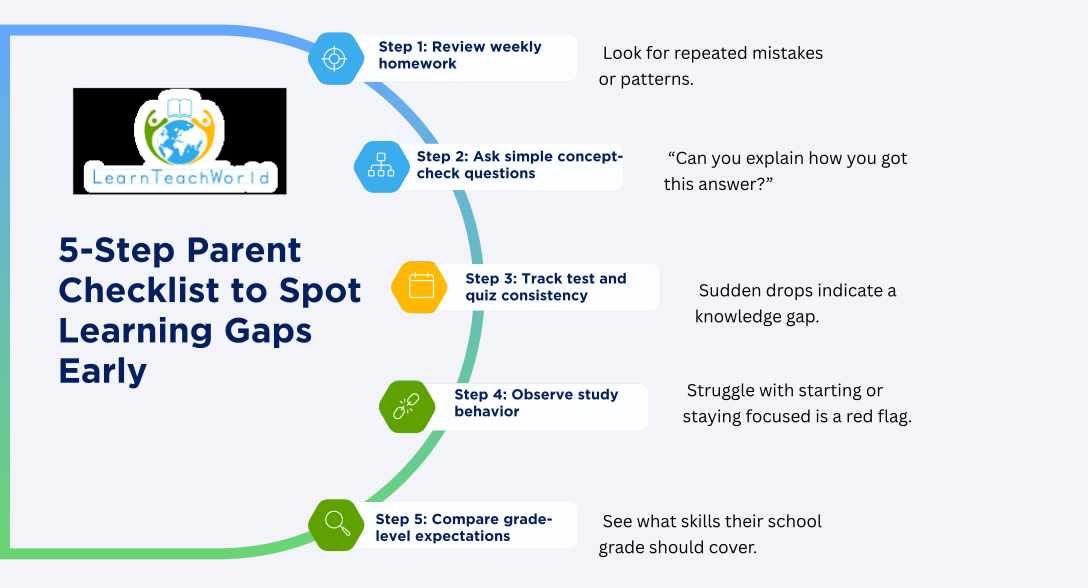
5. How Parents Can Identify Learning Gaps Early
Here are simple strategies to uncover hidden areas of struggle:
Review old tests and assignments
Look for repeated mistakes. Do you notice similar errors across multiple topics This can be a sign of a foundational weakness.
Ask your child to explain concepts
If they cannot explain it in simple terms, they may not fully understand it.
Use short diagnostic quizzes
Many platforms offer skill based assessments that can help highlight gaps.
Speak to the teacher
Teachers can point out where the child needs reinforcement.
Observe study behavior
If your child gets frustrated quickly or avoids work, this is often due to confusion, not laziness.
Listen to a Happy Parent Story: Sharing their child’s success with LearnTeachWorld
6. How Tutoring Helps Close Learning Gaps Quickly
A
one-on-one tutor
can diagnose and fix learning gaps in ways that are difficult in a classroom environment.
Here is how tutoring helps:
Personal attention
The tutor explains concepts at the child’s pace and learning style.
Targeted concept revision
Tutors teach the foundational skills that children missed earlier.
Practice that builds mastery
With one-on-one guidance, children practice in a structured and effective way.
Increased confidence
Once gaps close, children start enjoying learning again.
Consistent monitoring
You receive regular updates about progress and areas that need strengthening.
7. Why LearnTeachWorld Is a Reliable Solution for U.S. Parents
LearnTeachWorld take to generic page offers personalized, flexible tutoring aligned with U.S. academic standards.
Here is what makes us stand out:
One-on-one teaching designed around your child’s learning style
Tutors trained to spot and fix foundational gaps
Expertise in subjects including Math, English, Science, SAT and AP prep
Flexible schedules suitable for U.S. families
Regular progress reports
A free trial class to experience the teaching style
Learning gaps are easier to fix when you address them early. The right guidance can transform your child’s confidence and performance in just a few months.
8. Conclusion
Many children struggle silently in school without showing obvious signs of difficulty. Learning gaps are common but they should never be ignored. As a parent, recognizing these early signs can change your child’s entire academic path.
If you are noticing any of the signs discussed here, this is the right time to take action. A skilled tutor can rebuild confidence, strengthen foundations, and help your child thrive.
LearnTeachWorld is here to support your family with expert teachers and personalized learning sessions. Your child deserves a strong foundation and a confident future. We can help make that happen.
Ready to help your child study smarter and build lifelong learning skills?
👉 [Book Your Free Trial Class Today] and discover how LearnTeachWorld can make learning easier, engaging, and effective!